Quick Navigation

Everest Base Camp Trek

Everest Base Camp Trek 16 Days, Moderate to Challenging

Expert Local Guides
Award Winning Adventures
Safe Shopping Guarantee
Lowest Price Guarantee

3/5 from 3 Reviews
16 Days from
$ 650.00 600.00 per person

Grading: Moderate to Challenging

Max Elevation 5,644.5 m at Kalapatthar

Best Season Autumn & Spring

Meals
Full Board During Trek

Accommodation Premium Hotel & Himalayan Teahouses

Transportation
Private Vehicle & Domestic Flight

Walk through legendary Sherpa villages, cross suspension bridges above Himalayan rivers, enter the heart of Sagarmatha National Park, and stand beneath Mount Everest at one of the most iconic trekking destinations on Earth.

Trip Highlights

  • Reach Everest Base Camp, one of the most iconic trekking destinations on Earth
  • Hike to Kala Patthar for unforgettable sunrise views of Everest and surrounding peaks
  • Experience Sherpa culture, Buddhist monasteries, prayer wheels, mani walls, and mountain hospitality
  • Walk through Sagarmatha National Park, home to rare Himalayan flora and fauna
  • Explore Namche Bazaar, the cultural and trading centre of the Khumbu region
  • Visit Tengboche Monastery, one of the most important spiritual landmarks in the Everest region
  • Trek through glacier moraine, alpine valleys, suspension bridges, forests, and traditional villages
  • Enjoy carefully planned acclimatisation days in Namche Bazaar and Dingboche
  • Travel with experienced Trek O’Clock guides focused on safety, pacing, and comfort
  • Complete one of the world’s most famous trekking adventures with professional support

TRIP OUTLINE Trip Overview

Some journeys are famous for a reason.

The Everest Base Camp Trek is one of them.

This legendary adventure begins with a scenic flight to Lukla, where the mountains feel close from the very first moment.

From Lukla, the trail follows the Dudh Koshi River through peaceful villages, pine forests, prayer stones, and suspension bridges before entering Sagarmatha National Park.

The climb to Namche Bazaar is the first major ascent of the trek.

Namche is the lively Sherpa capital of the Khumbu, filled with mountain lodges, bakeries, trekking shops, local markets, and extraordinary views.

After an important acclimatisation day, the journey continues toward Tengboche, where the famous monastery sits beneath a stunning Himalayan skyline.

The trail then moves higher into the alpine valleys of Pangboche, Somare, Dingboche, Lobuche, and Gorakshep.

As altitude increases, the landscape becomes more open, rugged, and dramatic.

The walk to Everest Base Camp follows glacier moraine beside the Khumbu Glacier, surrounded by towering ice, rock, and snow.

Standing at Everest Base Camp is a deeply emotional achievement.

You are not at the summit of Everest, but you are standing in the legendary place where great mountain expeditions begin.

The next morning, the hike to Kala Patthar becomes one of the most unforgettable moments of the entire journey.

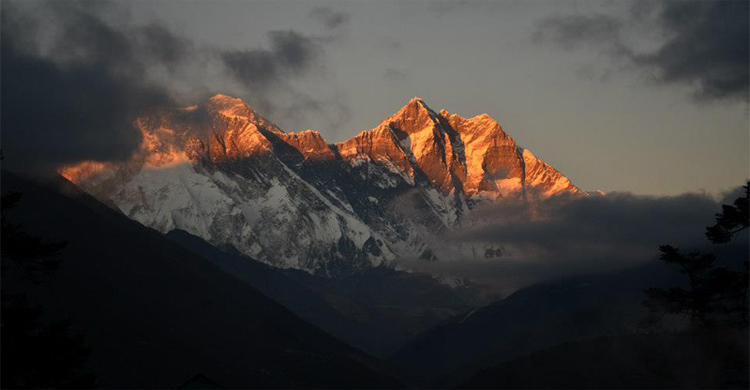
At 5,644.5 metres, Kala Patthar offers one of the finest close-up views of Mount Everest, with Nuptse, Pumori, Lhotse, and surrounding peaks glowing in the early morning light.

After this powerful highlight, the trail descends through Pheriche, Tengboche, Namche Bazaar, and Lukla, completing a complete Himalayan journey through the heart of the Everest region.

This is not simply a trekking holiday.

This is a once-in-a-lifetime walk to the foot of the world’s highest mountain.

Everest Base Camp Trek By The Numbers

The Everest Base Camp Trek is one of the most famous trekking routes in the world.

It attracts travellers from across the globe who dream of walking through the Khumbu region and standing at the base of Mount Everest.

This trek combines natural beauty, Sherpa culture, Buddhist heritage, mountain adventure, and high-altitude achievement into one unforgettable journey.

Key Expedition Numbers

  • 16 days total journey
  • 12 days trekking in the Everest region
  • 5,644.5 metres highest point at Kala Patthar
  • 5,364 metres at Everest Base Camp
  • 4,940 metres at Lobuche
  • 4,410 metres at Dingboche
  • 3,440 metres at Namche Bazaar
  • 2 carefully planned acclimatisation days
  • 1 legendary Himalayan destination
  • One of the world’s most iconic trekking adventures

Expedition Highlights

  • Reach the legendary Everest Base Camp at 5,364 metres
  • Hike to Kala Patthar at 5,644.5 metres for a breathtaking close-up view of Mount Everest
  • Experience the scenic mountain flight to Lukla and land at the famous Tenzing-Hillary Airport
  • Walk through Sagarmatha National Park, a UNESCO World Heritage mountain landscape
  • Explore Namche Bazaar, the vibrant Sherpa capital of the Khumbu region
  • Visit Tengboche Monastery, the largest monastery in the Everest region
  • Trek through traditional Sherpa villages including Phakding, Namche, Tengboche, Dingboche, Lobuche, and Pheriche
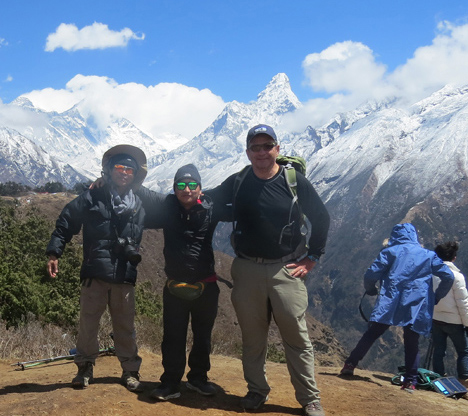
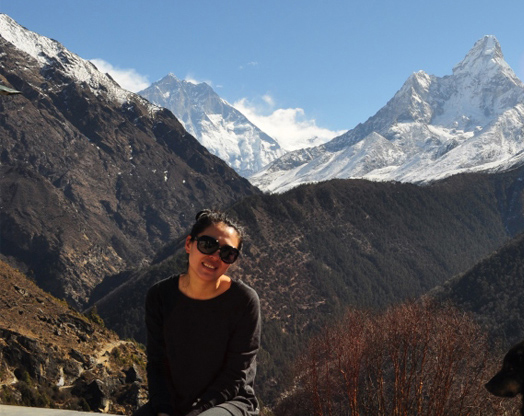
  • Witness spectacular views of Everest, Lhotse, Nuptse, Ama Dablam, Thamserku, Pumori, and many other Himalayan peaks
  • Cross suspension bridges, river valleys, pine forests, alpine landscapes, and glacier moraine trails
  • Designed for adventurous travellers seeking a premium, safe, and unforgettable Himalayan trekking experience

Why Trek To Everest Base Camp With Trek O’Clock

The Everest Base Camp Trek is one of the most meaningful trekking journeys in the Himalayas.

It is not only about reaching the base of the world’s highest mountain.

It is about walking through Sherpa villages, hearing prayer flags flutter in the mountain wind, crossing ancient trading trails, visiting Buddhist monasteries, and slowly moving deeper into the dramatic landscapes of the Khumbu.

At Trek O’Clock, we believe this legendary journey deserves more than a standard trekking itinerary.

Our approach combines careful acclimatisation, experienced local guides, premium trekking support, safety-focused planning, and authentic Himalayan storytelling to create a journey that feels personal, inspiring, and unforgettable.

This trek is designed for travellers who want to experience the Everest region with confidence, comfort, and deeper connection.

From the first mountain flight to Lukla to the final celebration with your trekking crew, every day is planned to balance adventure, safety, scenery, culture, and meaningful travel.

This is not simply a trek to Everest Base Camp.

This is a journey into the heart of the Himalayas.

Major Mountains Seen During The Trek

Himalayan Peak

Elevation

Why It’s Special

Mount Everest

8,848.86 m

The highest mountain on Earth and the ultimate symbol of the Khumbu region

Lhotse

8,516 m

The world’s fourth-highest mountain, rising beside Everest

Makalu

8,485 m

One of the world’s highest peaks, visible from selected high viewpoints

Nuptse

7,861 m

A dramatic wall of ice and rock above the Everest Base Camp trail

Pumori

7,161 m

A beautiful pyramid-shaped peak above Gorakshep and Kala Patthar

Ama Dablam

6,812 m

One of Nepal’s most elegant and iconic mountains

Thamserku

6,608 m

A powerful mountain seen beautifully from the lower Khumbu trail

Kangtega

6,782 m

A striking snow-covered peak visible near Namche and Tengboche

Taboche

6,501 m

A dramatic peak rising above the high Khumbu landscape

Cholatse

6,440 m

A sharp Himalayan summit near the upper Everest region

Island Peak

6,189 m

A famous trekking peak visible from the Dingboche area

Lobuche Peak

6,119 m

A popular climbing peak near the Everest Base Camp route

From the peaceful forests below Namche to the glacier landscapes near Gorakshep, the Everest Base Camp Trek surrounds you with some of the most famous peaks in the world.
For photographers, mountain lovers, and first-time Himalayan trekkers, this journey offers a rare combination of scenery, culture, and achievement.

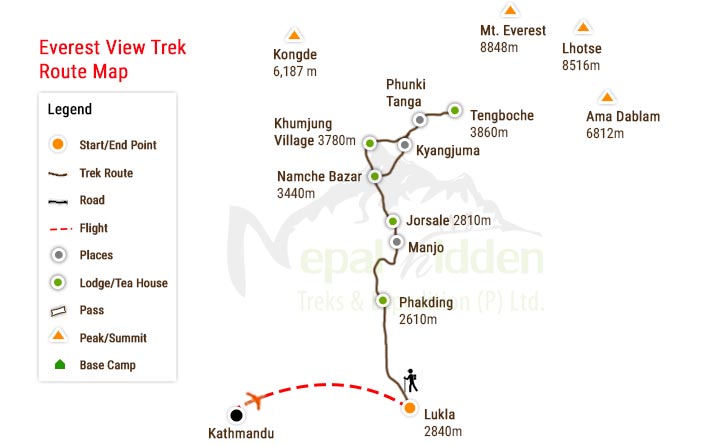
Everest Base Camp Trek route map

SHORT ITINERARY Everest Base Camp Trek

Day 1: Arrive in Kathmandu
7 km / 30-45 minute hotel drive/1400m

Day 2: Trek Preparation Day in Kathmandu
1400m

Day 3: Fly from Kathmandu to Lukla (2,860m), trek to Phakding (2,610m)
8 km / 45-minute flight, 3-4 hours trek

Day 4: Trek to Namche Bazaar (3,440m)
11 km / 5-6 hours trek.

Day 5: Acclimatization Day In Namche Bazaar
7 km / 2-3 hours trek

Day 6: Trek to Tengboche (3,867m)
9 km / 5-6 hours trek

Day 7: Trek to Dingboche (4,410m)
10 km / 5-6 hours trek

Day 8: Acclimatization Day In Dingboche
10 km / 4-5 hours trek

Day 9: Trek to Lobuche (4,940m)
8 km / 5-6 hours trek.

Day 10: Trek to Everest Base Camp (5,364m) via Gorakshep (5,164m)
11 km / 8-9 hours trek

Day 11: Trek to Kalapatthar (5,644.5m), descend to Pheriche (4,371m)
16 km / 7-8 hours trek.

Day 12: Trek to Tengboche (3,867m)
16.5 km / 7-hour trek

Day 13: Trek to Namche Bazaar (3,440m)
9 km / 5-hour trek

Day 14: Trek to Lukla (2,860m)
19 km / 5-6 hours trek

Day 15: Fly from Lukla to Kathmandu
45-minute flight / 30-45 minute hotel drive

Day 16: Departure
30-45 minute Airport drive.

Mountain Comforts & Himalayan Hospitality

Accommodation during the Everest Base Camp Trek combines carefully selected city comfort with authentic Himalayan teahouse experiences.

In Kathmandu, enjoy premium hotel accommodation before and after the trek.

During the trekking route, stay in traditional Himalayan teahouses operated by local mountain families.

These lodges are simple, welcoming, and full of character.

At lower elevations, rooms are generally more comfortable, while facilities become more basic as you move higher into remote areas.

The warm dining rooms, mountain meals, friendly hosts, and shared stories with other trekkers become part of the experience itself.

Accommodation Includes

  •  Premium hotel accommodation in Kathmandu
  • Comfortable Himalayan teahouses during the trek
  • Twin-sharing rooms
  • Basic bedding including mattress, pillow, and blanket
  • Shared bathrooms in higher-altitude regions
  • Attached bathrooms available in selected lower areas where possible
  • Warm communal dining rooms
  • Authentic Sherpa hospitality throughout the trail

Food During The Trek

Meals during the trek are designed to support energy, warmth, and recovery at altitude.

Breakfast, lunch, and dinner are included during trekking days.

Menus usually include a mixture of Nepali, Tibetan, Indian, and international dishes.

Dal bhat, Sherpa stew, noodles, fried rice, soups, pasta, potatoes, pancakes, eggs, porridge, tea, and hot drinks are commonly available.

Vegetarian meals are widely available throughout the route.

Drinking Water

Safe drinking water is essential during the trek.

Boiled water, bottled water, and filtered water may be available at lodges depending on location.

We recommend carrying a reusable bottle and using purification tablets, drops, or a filtration system.

Bottled water, boiled water, hot drinks, and extra beverages are usually considered personal expenses.

Is This Trek Right For You?

The Everest Base Camp Trek is a moderate to challenging Himalayan journey.

It is suitable for active travellers with good general fitness, preparation, and a positive mindset.

You do not need technical climbing experience to complete this trek.

However, the trek involves long walking days, steady altitude gain, uneven trails, suspension bridges, rocky sections, cold conditions, and high-altitude walking above 5,000 metres.

Most trekking days involve 5–6 hours of walking, with longer days during the Everest Base Camp and Kala Patthar sections.

The journey is physically demanding, but with the right preparation, careful pacing, and professional guidance, it is achievable for many travellers.

At Trek O’Clock, our experienced guides support you throughout the entire journey with steady pacing, rest stops, hydration reminders, altitude awareness, and encouragement.

The goal is not to rush.

The goal is to walk safely, confidently, and enjoy one of the greatest mountain journeys in the world.

Recommended Preparation

•Regular walking, hiking, or cardio exercise before the trek

• Basic endurance and leg-strength preparation

• Practice hikes with a light daypack

• Comfortable, well-tested hiking boots

• Ability to walk several hours over multiple days

• A positive mindset and willingness to embrace the adventure

• Willingness to follow guide advice and maintain a steady pace

With preparation and support, the Everest Base Camp Trek becomes not only achievable but one of the most rewarding adventures of a lifetime.

Trekking Safely Through The Himalayas

The Everest Base Camp Trek reaches a maximum elevation of 5,644.5 metres at Kala Patthar.

The journey also includes overnight stays above 4,000 metres in Dingboche, Lobuche, Gorakshep, and Pheriche.

Because of this, altitude awareness and proper acclimatisation are very important.

At Trek O’Clock, your safety and comfort remain our highest priorities throughout the journey.

This itinerary includes acclimatisation time in Namche Bazaar and Dingboche to help your body adjust gradually as you move higher into the Himalayas.

Our guides monitor trekkers carefully and encourage a slow, steady rhythm rather than rushing.

Understanding Altitude

As elevation increases, it is normal for some travellers to feel mild symptoms while adjusting to thinner air.

Common symptoms may include:

• Mild headache

• Fatigue

• Light dizziness

• Difficulty sleeping

• Reduced appetite

• Shortness of breath during exertion

Most mild symptoms improve with rest, hydration, food, and proper acclimatisation.

However, altitude sickness must always be taken seriously.

Trekkers should inform their guide immediately if symptoms appear or worsen.

Safety Measures Included

• Experienced licensed Himalayan trekking guides

• Carefully paced acclimatisation itinerary

• Daily wellness and altitude awareness monitoring

• First-aid support

• Emergency response planning

• Communication support during the trek

• Guide decision-making based on safety and individual condition

• Emergency evacuation coordination if required

With proper pacing, hydration, rest, preparation, and professional guidance, the Everest Base Camp Trek can be completed safely and confidently by well-prepared travellers.

Spring & Autumn Seasons

The best seasons for the Everest Base Camp Trek are Spring and Autumn.

These periods usually offer the most stable weather, clearer mountain views, and better trekking conditions.

Spring — March To May

Spring brings warmer temperatures, blooming rhododendron forests in lower regions, longer daylight hours, and active trekking energy across the Everest region.

This is also one of the major climbing seasons, so Everest Base Camp may be filled with colourful expedition tents and mountaineering activity.

The mountain atmosphere during spring can feel especially exciting.

Autumn — September To November

Autumn is one of the most popular trekking seasons in Nepal.

After the monsoon, the skies are often clear, the air is fresh, and the mountain views are sharp and dramatic.

This season is ideal for photography, high-altitude trekking, and comfortable walking conditions.

Challenging Seasons

Winter and monsoon are more challenging.

Winter can bring extreme cold, snow, icy trails, and shorter daylight hours.

Monsoon can bring rain, clouds, slippery trails, leeches in lower regions, and reduced mountain visibility.

Trek O’Clock will always help recommend the most suitable season based on your experience, safety, and travel goals.

Your Everest Base Camp journey includes private airport transfers and domestic flights as outlined in the itinerary.

Included Transportation

• Private international airport transfers in Kathmandu

• Kathmandu hotel to domestic airport transfer

• Kathmandu to Lukla domestic flight during normal operations

• Lukla to Kathmandu domestic flight during normal operations

• Private transfer from airport to hotel after the trek

The Everest Base Camp Trek requires official trekking and conservation permits.

Permit rules and fees can change, so Trek O’Clock will confirm the latest requirements before your departure and arrange the necessary documentation for your trip.

Commonly Required Permits

• Sagarmatha National Park Entry Permit

• Khumbu Pasang Lhamu Rural Municipality Permit

• Trekkers’ Information Management System card if required by current regulation

All necessary permit arrangements are handled by Trek O’Clock as part of your trekking service.

Travellers should carry a valid passport and passport-sized photos or digital copies as required.

Essential Trekking Gear

Packing properly is important for comfort and safety on the Everest Base Camp Trek.

The weather can change quickly in the Himalayas, and temperatures become very cold at higher elevations.

Clothing

• Down jacket

• Waterproof shell jacket

• Fleece jacket

• Thermal base layers

• Trekking pants

• Moisture-wicking shirts

• Warm hat

• Sun hat or cap

• Gloves and inner gloves

• Buff, scarf, or neck warmer

• Hiking socks

• Comfortable camp clothing

Footwear

• Comfortable, well-tested hiking boots

• Camp shoes or sandals

• Warm socks

• Gaiters if trekking in snow or wet conditions

Accessories

• Sunglasses with UV protection

• Sunscreen and lip balm

• Reusable water bottle

• Water purification tablets or filtration system

• Headlamp with spare batteries

• Power bank

• Trekking poles

• Small daypack

• Dry bags or waterproof covers

• Camera or phone for photography

Personal Items

• Passport

• Travel insurance documents

• Passport photos or digital copies

• Personal medication

• Toiletries and hygiene products

• Hand sanitiser

• Quick-dry towel

• Snacks or energy bars

• Basic personal first-aid items

Your Trek O’Clock guide will advise if any special gear is recommended for your travel season.

Mountain Comforts & Himalayan Hospitality

Accommodation during the Everest Base Camp Trek combines carefully selected city comfort with authentic Himalayan teahouse experiences.

In Kathmandu, enjoy premium hotel accommodation before and after the trek.

During the trekking route, stay in traditional Himalayan teahouses operated by local mountain families.

These lodges are simple, welcoming, and full of character.

At lower elevations, rooms are generally more comfortable, while facilities become more basic as you move higher into remote areas.

The warm dining rooms, mountain meals, friendly hosts, and shared stories with other trekkers become part of the experience itself.

Accommodation Includes

  •  Premium hotel accommodation in Kathmandu
  • Comfortable Himalayan teahouses during the trek
  • Twin-sharing rooms
  • Basic bedding including mattress, pillow, and blanket
  • Shared bathrooms in higher-altitude regions
  • Attached bathrooms available in selected lower areas where possible
  • Warm communal dining rooms
  • Authentic Sherpa hospitality throughout the trail

Food During The Trek

Meals during the trek are designed to support energy, warmth, and recovery at altitude.

Breakfast, lunch, and dinner are included during trekking days.

Menus usually include a mixture of Nepali, Tibetan, Indian, and international dishes.

Dal bhat, Sherpa stew, noodles, fried rice, soups, pasta, potatoes, pancakes, eggs, porridge, tea, and hot drinks are commonly available.

Vegetarian meals are widely available throughout the route.

Drinking Water

Safe drinking water is essential during the trek.

Boiled water, bottled water, and filtered water may be available at lodges depending on location.

We recommend carrying a reusable bottle and using purification tablets, drops, or a filtration system.

Bottled water, boiled water, hot drinks, and extra beverages are usually considered personal expenses.

Is This Trek Right For You?

The Everest Base Camp Trek is a moderate to challenging Himalayan journey.

It is suitable for active travellers with good general fitness, preparation, and a positive mindset.

You do not need technical climbing experience to complete this trek.

However, the trek involves long walking days, steady altitude gain, uneven trails, suspension bridges, rocky sections, cold conditions, and high-altitude walking above 5,000 metres.

Most trekking days involve 5–6 hours of walking, with longer days during the Everest Base Camp and Kala Patthar sections.

The journey is physically demanding, but with the right preparation, careful pacing, and professional guidance, it is achievable for many travellers.

At Trek O’Clock, our experienced guides support you throughout the entire journey with steady pacing, rest stops, hydration reminders, altitude awareness, and encouragement.

The goal is not to rush.

The goal is to walk safely, confidently, and enjoy one of the greatest mountain journeys in the world.

Recommended Preparation

•Regular walking, hiking, or cardio exercise before the trek

• Basic endurance and leg-strength preparation

• Practice hikes with a light daypack

• Comfortable, well-tested hiking boots

• Ability to walk several hours over multiple days

• A positive mindset and willingness to embrace the adventure

• Willingness to follow guide advice and maintain a steady pace

With preparation and support, the Everest Base Camp Trek becomes not only achievable but one of the most rewarding adventures of a lifetime.

Trekking Safely Through The Himalayas

The Everest Base Camp Trek reaches a maximum elevation of 5,644.5 metres at Kala Patthar.

The journey also includes overnight stays above 4,000 metres in Dingboche, Lobuche, Gorakshep, and Pheriche.

Because of this, altitude awareness and proper acclimatisation are very important.

At Trek O’Clock, your safety and comfort remain our highest priorities throughout the journey.

This itinerary includes acclimatisation time in Namche Bazaar and Dingboche to help your body adjust gradually as you move higher into the Himalayas.

Our guides monitor trekkers carefully and encourage a slow, steady rhythm rather than rushing.

Understanding Altitude

As elevation increases, it is normal for some travellers to feel mild symptoms while adjusting to thinner air.

Common symptoms may include:

• Mild headache

• Fatigue

• Light dizziness

• Difficulty sleeping

• Reduced appetite

• Shortness of breath during exertion

Most mild symptoms improve with rest, hydration, food, and proper acclimatisation.

However, altitude sickness must always be taken seriously.

Trekkers should inform their guide immediately if symptoms appear or worsen.

Safety Measures Included

• Experienced licensed Himalayan trekking guides

• Carefully paced acclimatisation itinerary

• Daily wellness and altitude awareness monitoring

• First-aid support

• Emergency response planning

• Communication support during the trek

• Guide decision-making based on safety and individual condition

• Emergency evacuation coordination if required

With proper pacing, hydration, rest, preparation, and professional guidance, the Everest Base Camp Trek can be completed safely and confidently by well-prepared travellers.

Spring & Autumn Seasons

The best seasons for the Everest Base Camp Trek are Spring and Autumn.

These periods usually offer the most stable weather, clearer mountain views, and better trekking conditions.

Spring — March To May

Spring brings warmer temperatures, blooming rhododendron forests in lower regions, longer daylight hours, and active trekking energy across the Everest region.

This is also one of the major climbing seasons, so Everest Base Camp may be filled with colourful expedition tents and mountaineering activity.

The mountain atmosphere during spring can feel especially exciting.

Autumn — September To November

Autumn is one of the most popular trekking seasons in Nepal.

After the monsoon, the skies are often clear, the air is fresh, and the mountain views are sharp and dramatic.

This season is ideal for photography, high-altitude trekking, and comfortable walking conditions.

Challenging Seasons

Winter and monsoon are more challenging.

Winter can bring extreme cold, snow, icy trails, and shorter daylight hours.

Monsoon can bring rain, clouds, slippery trails, leeches in lower regions, and reduced mountain visibility.

Trek O’Clock will always help recommend the most suitable season based on your experience, safety, and travel goals.

Your Everest Base Camp journey includes private airport transfers and domestic flights as outlined in the itinerary.

Included Transportation

• Private international airport transfers in Kathmandu

• Kathmandu hotel to domestic airport transfer

• Kathmandu to Lukla domestic flight during normal operations

• Lukla to Kathmandu domestic flight during normal operations

• Private transfer from airport to hotel after the trek

The Everest Base Camp Trek requires official trekking and conservation permits.

Permit rules and fees can change, so Trek O’Clock will confirm the latest requirements before your departure and arrange the necessary documentation for your trip.

Commonly Required Permits

• Sagarmatha National Park Entry Permit

• Khumbu Pasang Lhamu Rural Municipality Permit

• Trekkers’ Information Management System card if required by current regulation

All necessary permit arrangements are handled by Trek O’Clock as part of your trekking service.

Travellers should carry a valid passport and passport-sized photos or digital copies as required.

Essential Trekking Gear

Packing properly is important for comfort and safety on the Everest Base Camp Trek.

The weather can change quickly in the Himalayas, and temperatures become very cold at higher elevations.

Clothing

• Down jacket

• Waterproof shell jacket

• Fleece jacket

• Thermal base layers

• Trekking pants

• Moisture-wicking shirts

• Warm hat

• Sun hat or cap

• Gloves and inner gloves

• Buff, scarf, or neck warmer

• Hiking socks

• Comfortable camp clothing

Footwear

• Comfortable, well-tested hiking boots

• Camp shoes or sandals

• Warm socks

• Gaiters if trekking in snow or wet conditions

Accessories

• Sunglasses with UV protection

• Sunscreen and lip balm

• Reusable water bottle

• Water purification tablets or filtration system

• Headlamp with spare batteries

• Power bank

• Trekking poles

• Small daypack

• Dry bags or waterproof covers

• Camera or phone for photography

Personal Items

• Passport

• Travel insurance documents

• Passport photos or digital copies

• Personal medication

• Toiletries and hygiene products

• Hand sanitiser

• Quick-dry towel

• Snacks or energy bars

• Basic personal first-aid items

Your Trek O’Clock guide will advise if any special gear is recommended for your travel season.
DETAILED ITINERARY Everest Base Camp Trek

Arrive in Nepal, where the atmosphere of Kathmandu and the distant promise of the Himalayas welcome you to the beginning of your adventure.

A Trek O’Clock representative will greet you at Tribhuvan International Airport and transfer you to your hotel.

After check-in, relax from your journey, enjoy the hotel facilities, and prepare for the days ahead.

Optional Activity: Kathmandu sightseeing

Today is dedicated to preparation, briefing, and final organisation before entering the Everest region.

After breakfast, meet your Trek O’Clock guide for a detailed trek briefing. Your guide will explain the route, altitude profile, daily walking expectations, safety procedures, packing requirements, and mountain conditions.

If you wish, an optional guided sightseeing tour of Kathmandu can be arranged. This may include UNESCO World Heritage sites, ancient temples, Buddhist stupas, and historic cultural landmarks.

The rest of the day is free for final gear checks, shopping, and rest.

Begin your Himalayan journey with a scenic mountain flight to Lukla.

The flight offers beautiful views of hills, valleys, rivers, and distant snow-covered peaks before landing at Tenzing-Hillary Airport.

After meeting the porter team in Lukla, begin trekking along the Dudh Koshi Valley.

The trail passes Chhuplung, Thado Koshi, Ghat, prayer walls, mani stones, suspension bridges, and peaceful village landscapes before reaching Phakding.

This first trekking day is gentle and designed to ease you into the rhythm of the journey.

Today the trail follows the Dudh Koshi River through beautiful Sherpa villages including Toktok, Benkar, Monjo, and Jorsale.

At Monjo, enter Sagarmatha National Park, the protected mountain landscape surrounding the Everest region.

The trail crosses several suspension bridges, including the famous Hillary Suspension Bridge, before beginning the long ascent toward Namche Bazaar.

As you climb higher, the first distant glimpse of Everest may appear on a clear day.

Arrive at Namche Bazaar, the vibrant Sherpa capital of the Khumbu, surrounded by mountain walls, colourful lodges, bakeries, shops, and trekking energy.

A carefully planned acclimatisation day helps your body adjust to the increasing altitude.

After breakfast, hike toward the Everest View Hotel, one of the most scenic viewpoints above Namche Bazaar.

On a clear day, enjoy beautiful views of Everest, Lhotse, Nuptse, Ama Dablam, Thamserku, and surrounding peaks.

Return to Namche for lunch and spend the afternoon exploring local bakeries, mountain shops, museums, and the vibrant Sherpa trading town.

This day follows the important mountain principle of climbing higher and sleeping lower.

Leave Namche and follow a scenic trail with outstanding views of Ama Dablam, Everest, Lhotse, and Thamserku.

The route passes Kyangjuma and descends toward Phunki Tenga before climbing steadily through rhododendron and pine forest to Tengboche.

Tengboche is one of the spiritual highlights of the Everest region.

In the evening, visit Tengboche Monastery, the largest monastery in the Khumbu, where prayer chants, mountain views, and Buddhist traditions create a peaceful Himalayan atmosphere.

The trail descends through forest to Deboche before crossing the Imja Khola and continuing through Pangboche, one of the oldest Sherpa settlements in the region.

As you gain altitude, the landscape becomes more open, dry, and alpine.

The trail passes Somare and climbs gradually toward Dingboche, a beautiful high-altitude village surrounded by stone-walled fields and dramatic mountain views.

Island Peak, Lhotse, and Ama Dablam dominate the skyline as the air becomes thinner and the expedition atmosphere grows stronger.

Today is another essential acclimatisation day before moving deeper into the high Himalayas.

After breakfast, hike gradually toward a high viewpoint above Dingboche.

The climb offers magnificent views of Island Peak, Cho Oyu, Thamserku, Pumori, Ama Dablam, and the surrounding Imja Valley.

Return to Dingboche for lunch and rest.

The afternoon is free to relax, hydrate, and prepare for the higher sections of the Everest Base Camp route.

Leave Dingboche and trek through open alpine terrain surrounded by powerful Himalayan views.

The trail gradually climbs toward Thokla and continues past the memorials dedicated to climbers and mountaineers who lost their lives in the Everest region.

This section is emotional, scenic, and deeply connected to the history of Himalayan mountaineering.

As the altitude increases, the trail becomes more rugged and the air thinner.

Walk slowly, stay hydrated, and follow your guide’s pace before arriving at Lobuche for the night.

Today is one of the most iconic days of the journey.

Follow the trail along the Khumbu Glacier moraine toward Gorakshep, the final settlement before Everest Base Camp.

After lunch at Gorakshep, continue toward Everest Base Camp.

The trail crosses rocky moraine, glacier landscapes, and dramatic ice formations while enormous Himalayan walls rise around you.

Reaching Everest Base Camp is a powerful and emotional achievement.

During climbing season, colourful expedition tents may be visible across the base camp area, adding to the atmosphere of this legendary place.

After spending time at Base Camp, return carefully to Gorakshep for the night.

Begin before sunrise for the unforgettable hike to Kala Patthar.

Although challenging at high altitude, this climb offers one of the finest viewpoints in the Himalayas.

From the summit area, enjoy breathtaking close-up views of Mount Everest, Nuptse, Pumori, Lhotse, and the surrounding peaks glowing in the early morning light.

After taking in the views, descend to Gorakshep and continue down through Lobuche and Thokla toward Pheriche.

Descending to a lower altitude helps the body recover after the highest point of the trek.

Today the trail descends through the beautiful high valleys of the Khumbu.

Pass through Pangboche, Somare, and Deboche while enjoying changing mountain views, open landscapes, and a gradual return toward greener surroundings.

Arrive back at Tengboche, where the peaceful monastery setting offers another chance to reflect on the journey.

If timing allows, you may visit Tengboche Monastery again or simply enjoy the quiet Himalayan atmosphere.

Follow the descending and ascending trail through forest, river valleys, and mountain villages as you return toward Namche Bazaar.

The route passes Phunki Tenga and continues through scenic sections with views of Ama Dablam, Thamserku, and the surrounding Khumbu peaks.

Arriving back in Namche after many days in the high mountains feels like a celebration.

Enjoy bakeries, cafes, warm meals, and the lively atmosphere of the Sherpa capital.


Today is the final trekking day.

Descend from Namche through forests, suspension bridges, river valleys, and villages including Jorsale, Monjo, Phakding, Ghat, and Chhuplung.

The trail gradually returns to Lukla, where the expedition first began.

In the evening, celebrate the successful completion of the Everest Base Camp Trek with your guide, porters, and fellow trekkers.

This is a special moment to reflect on the journey, the mountain views, the challenge, and the achievement of standing at the foot of Mount Everest.

Fly back to Kathmandu, enjoying final views of the Khumbu mountains from the air.

Upon arrival, transfer to your hotel and enjoy a well-earned rest.

The afternoon is free for souvenir shopping, spa treatments, local exploration, or simply relaxing after the trek.

In the evening, join Trek O’Clock for a farewell dinner celebrating your successful Himalayan journey.

Note: During peak trekking months, Lukla flights may operate via Ramechhap / Manthali Airport instead of Kathmandu. If this applies, Trek O’Clock will arrange the necessary transfers and logistics.


After breakfast, transfer to Tribhuvan International Airport for your international departure.

If you are extending your stay in Nepal, Trek O’Clock can assist with additional tours, cultural experiences, trekking extensions, or relaxation stays.

Depart with unforgettable memories of Everest Base Camp, Kala Patthar, Sherpa villages, Himalayan monasteries, and the people who made the journey special.

What's included?

  • Premium airport transfers throughout your journey
  • Premium hotel accommodation in Kathmandu
  • Comfortable Himalayan teahouse accommodation during the trek
  • Experienced licensed English-speaking trekking guide
  • Porter support for a more comfortable trekking experience
  • Full-board meals during trekking days
  • Breakfast in Kathmandu
  • Domestic flights as outlined in the itinerary
  • Required trekking permits as per current regulations
  • Sleeping bag, down jacket, duffel bag, and basic trekking support equipment where applicable
  • First-aid support and emergency planning
  • Guide and porter wages, meals, accommodation, transportation, and insurance
  • Trek O’Clock operational support throughout the journey
  • Farewell dinner in Kathmandu
  • Trip completion certificate

What's not included?

  • International flights
  • Nepal visa fees
  • Personal travel insurance
  • Lunch and dinner in Kathmandu unless specified
  • Personal trekking gear purchases
  • Wi-Fi, charging fees, hot showers, laundry, and bottled drinks on the trail
  • Extra meals, snacks, desserts, and beverages
  • Personal expenses
  • Tips for guides, porters, and drivers
  • Extra baggage charges on domestic flights
  • Kathmandu sightseeing costs unless included in your package
  • Additional accommodation caused by delays, weather, illness, or itinerary changes
  • Any expenses not listed under the included section

Group Joining Dates & Prices

All published dates are guaranteed departures. If these dates do not match your travel plans, our travel experts can help create a tailor-made trip for your preferred schedule.

Start Finish Price Availability Action
Saturday29 Jun 2024 Monday15 Jul 2024 $750.00
Per Person
5 Pax Limited Space Book Now
Saturday 29 Jun 2024
Monday 15 Jul 2024
Price $750.00 Per Person
Availability 5 Pax Limited Space
Book Now
Request Custom Date

16 DAYS FROM

$ 650.00 600.00
Per Person


We offer group discount

No of PAX Price / PP
More than 4$590.00
2-3 Paxes$600.00

Reviews

3 - Good Based on 3 Reviews


Texax, USA

2023

Climbing Expert Guide 1

I've wanted to trek in the Himalayas for almost four years, but I kept making excuses — wrong season, wrong gear, not fit enough, no one to go with. Trek O'Clock finally pushed me off the fence. Their beginner's guide to Triund answered every silly question I was too embarrassed to ask anywhere else. What to eat. How to layer. Whether I really needed trekking poles (I didn't). The trail was exactly as described, and the sunrise from the top made me cry happy tears. I'm already planning my next trek using their site. Thank you for making this feel possible for someone like me.

Laura Martinez
Laura Martinez
LONDON

2024

Climbing Expert Guide 2

I've wanted to trek in the Himalayas for almost four years, but I kept making excuses — wrong season, wrong gear, not fit enough, no one to go with. Trek O'Clock finally pushed me off the fence. Their beginner's guide to Triund answered every silly question I was too embarrassed to ask anywhere else. What to eat. How to layer. Whether I really needed trekking poles (I didn't). The trail was exactly as described, and the sunrise from the top made me cry happy tears. I'm already planning my next trek using their site. Thank you for making this feel possible for someone like me.

John Doe
John Doe
Argentina

2024

Best Experience

The Langtang Valley Exploration trek usually takes around 8 to 10 days to complete and can be extended to your preference.

FAQ's

The Everest Base Camp Trek is considered moderate to challenging.

It does not require technical climbing skills, but it does involve long walking days, high altitude, uneven terrain, cold conditions, and a maximum elevation of 5,644.5 metres at Kala Patthar.

With proper preparation, steady pacing, and experienced guide support, many active travellers can complete this trek successfully.

Previous hiking or trekking experience is helpful, but not essential.

Many travellers complete Everest Base Camp as their first major Himalayan trek.

Good fitness, preparation, patience, and a positive mindset are important.

Kala Patthar offers one of the best close-up views of Mount Everest and is one of the most memorable highlights of the journey.

Yes.

The itinerary reaches Everest Base Camp at 5,364 metres.

You also hike to Kala Patthar, which offers one of the most famous viewpoints of Mount Everest.

Altitude affects everyone differently, regardless of age, fitness, or previous experience.

The itinerary is designed with acclimatisation days in Namche Bazaar and Dingboche to reduce risk.

Our guides monitor trekkers carefully throughout the journey.

Walking slowly, staying hydrated, eating well, and following guide advice are essential.

In Kathmandu, travellers stay in premium hotel accommodation.

During the trek, accommodation is in Himalayan teahouses.

Teahouses are simple but welcoming, with basic rooms, shared facilities in higher areas, warm dining rooms, and local hospitality.

Facilities become more basic as altitude increases.

Breakfast, lunch, and dinner are included during trekking days.

Meals usually include Nepali, Tibetan, Indian, and international dishes.

Dal bhat, noodles, soups, rice, potatoes, eggs, porridge, pasta, pancakes, tea, and hot drinks are commonly available.

Vegetarian options are widely available.

Yes.

Trek O’Clock includes experienced licensed guides and porter support.

Guides manage safety, route decisions, altitude awareness, local communication, and daily trekking support.

Porters help carry the main trekking load, allowing you to enjoy the journey more comfortably.

Spring and Autumn are the best seasons.

Spring offers warmer conditions, blooming lower trails, and the exciting Everest climbing season atmosphere.

Autumn usually offers clear skies, stable weather, and excellent mountain visibility.

Yes.

Domestic flights to Lukla usually have luggage limits for checked baggage and hand carry.

Extra baggage may be charged by the airline.

Trek O’Clock will advise the latest luggage allowance before your trek.

Lukla flights depend heavily on weather.

Delays and cancellations are possible.

We recommend keeping at least one extra flexible day after the trek.

Trek O’Clock will assist with flight changes, logistics, and alternative arrangements when required.

Yes.

Solo travellers can join private or small-group departures.

The Everest Base Camp Trek is suitable for solo adventurers, couples, friends, families, and private groups who are prepared for a high-altitude trekking journey.

Yes.

The Everest Base Camp Trek can be customised based on your fitness, travel dates, group size, and interests.

Possible extensions include Gokyo Lakes, Cho La Pass, Everest Three High Passes, Island Peak, helicopter return options, Kathmandu sightseeing, or additional Nepal travel experiences.

Booking your trek is simple.

You can contact Trek O’Clock through our website, email, WhatsApp, or direct enquiry form.

Our team will guide you through the full process, including itinerary confirmation, preparation advice, permits, arrival details, packing support, and final trek arrangements.

Quick Enquiry

Fill the form below for your interest